Friday, August 25, 2017

Free Salt Lake City IEP Workshops


Special Education services are provided under Federal law.  This means that a child should receive the same type of services anywhere in the nation.  Meaning, the same services should be offered in Los Angeles as they are in Salt Lake City.  This is not the case.

Let us consider the state of special education in the state of Utah: Between 2002-2016 there have only been 7 administrative hearings in the state challenging special education programing.  Based on national averages, this number should be 7-14 per year.  Until now, no one has been standing up and asking what they are entitled to.

 The CDC states that Utah has the highest rate of autism in the country.  According to the number of children receiving special education services for Autism in Utah, they are tied for 36th.  This statistic and the following ones, can be found in this Department of Education Report.

Utah has the highest highest dropout rate in the nation for students with disabilities. The percentage in Utah of students with disabilities who do not graduate because they dropped out is 32.3%; the national average is 11.7%.

Utah ranks 46th in the country for the rate of Special Education delivered in segregated environments. This is almost twice the national average.  Under Federal law children are required to receive special education services in the least restrictive environment.

When children are segregated they can not learn from their typical peers.  Often these services are sold to parents as special programs in special settings.  Where their children will receive customized care tailored to the common experiences that they share with others who have the same disability.

What they really are is an attempt to limit disturbances these children bring to the classroom.  Separate but equal is not equal.

Only Texas and the Washington DC rank lower than Utah for compliance with federal special education law.  (25 other states also fall under the same status). Put simply for a state that holds itself out as caring for families Utah is doing a despicable job taking care of those who have disabilities.

Something has to change.  The lives of thousands of children and their families are being neglected. An entire generation of children with disabilities are being put out into the world without the skills necessary to survive.

I am currently the only special education attorney in the state of Utah who represents parents.  My efforts alone are not enough to change the way special education services are offered in the state.

As a result I have started to organize parents at a grassroots level to educate them on how to get the most from their child's special education program.

The way we change this is by insisting that these children's special education programs be adjusted to conform with the law.  We address this by learning how to make a better Individualized Education Plan (IEP).

I would like to invite you to attend two free workshops I am hosting in the Salt Lake City area.  They are on IEP development and will be a great resource for parents who have children with IEPs.  If you cannot attend please share the links to the event page or this blog post with anyone and everyone who could benefit from this type of programing.

I am doing this free of charge because having parents demand more from their schools will make it easier to represent my clients.

If you are a parent who will be attending I highly encourage you to schedule or reschedule your next IEP meeting to be after September 9th.  Attendance at both events is not required but is highly encouraged.


Here are the links to the events

September 2
Sandy Library
10:30 to 12:30
A Collaborative Approach to Special Education 

September 9
Millcreek Library
1:30 to 4:30
Let's Prepare Together 

Join the revolution and demand the change you want to see in the world.


Friday, August 4, 2017

What's in a Label?


Labels are a necessary evil.

The first step to finding a solution is understanding what question you are attempting to answer.  

In The Hitchhiker's Guide to the Galaxy a society got so fed up with life that they created a supercomputer whose sole purpose was coming up with "the answer to the ultimate question of life, the universe and everything."  The computer took seven and a half million years to come up with the solution.  Take a couple of minutes to watch the scene unfold.


SPOILER ALERT

The answer to the question was 42.  What kind of answer is that?  As the computer states "Only when you know the question will you know what the answer means."

Receiving a diagnosis and being labeled can be just as frustrating as being told that the answer to everything is the number 42.  Often it is frustrating and for some people even traumatic.  If you have found yourself in this situation then you can relate to suddenly becoming "one of those people".

Many people will refuse to accept the diagnosis as being true.  They simply cannot deal with the stigma associated with how they personally view the diagnosis, or more likely how they feel the world perceives the categorization.

A diagnosis is not a scarlet letter.  It is not meant to ostracize or alienate the individual.  It is meant to supply a variety of questions that can now be answered.  Once the individual knows what questions to ask then they can prepare themselves to receive the answer.

As a person who has lived my entire life with a learning disability I understand and can relate to the frustration of this experience.  I have had to fight for myself on many occasions on how to deal with my labels.  I have asked myself if they are useful, if they define me, and whether they can be defied.  I understand the corresponding strain and exhaustion that comes with this endeavor.  

I also can relate to the stigma many parents and individuals experience when they are first diagnosed with a disability or when they have to reach out and ask for the assistance from another.  I have struggled over the years with how I relate to this information and how useful it is to share with others.  Even though this battle can be hard, it is important that it occur.  

It is only after a person deals with the stigma of their label that they can gain the benefits of receiving a diagnosis.

I want to share with you a few things I have learned as I went through this process.

While I was in law school I experienced an huge amount of stress that was centered on the stigma associated with having a learning disability.  When I reached out to my school they did not respond to me in a helpful manner.  This was completely different than any prior experience I had went through with other institutions of education.

This experience made me deeply analyze what it means to have a disability. 

My existential exercise helped me create a simple mantra. 

In order to understand the nature of a disability you must first understand that there is no such thing as a disability.

This has become a profound mantra in my life and one I share with others as often as possible.  

What I mean by it is that the being labeled as someone who has a disability does not change who you are.  A disability is simply a helpful social categorization of individuals who have experienced life on a different but similar path.  No two people experience their disability in the same way. 

Assigning a label to this shared experience is primarily helpful because it allows these individuals to learn from their common experiences and struggles.  This is important because for people with disabilities their life experience will be different than that of others.  It is simply a factual observation and does not express anything about whether the different experience is good or bad.

If you have a struggle with stigma, like I did, I would like to challenge you to actively strive to alter your perception.  

Choosing to not learn from the experiences of others will put you and/or your child at a needless disadvantage.  Furthermore, it perpetuates the problems that you most likely fear.

The best thing that happened to me was coming to terms with this stigma.  Doing so has allowed me to add my voice to the shared experiences of others. It has strengthened my confidence and allowed me to discover that my experiences and strategies are truly unique.  

Dealing with this stigma allowed me begin asking the ultimate questions and more importantly find the answers. When I first received my diagnosis it was about as helpful as being told that the answer to my life was 42. It allowed me to receive some accommodations in school but that was about all. Coming to terms with my label allowed me to learn from it. Suddenly I was offered a road map of the obscure nooks and crannies of my mind. I had discovered that even though I am unique- I also have a lot in common with others who share my label.

Please join me on this path towards being more open and honest with others about what is like to be in your shoes.  By doing this you will become an incredible role model for your child.  This will allow them to understand what environments are appropriate to share things in and which are not.

Sunday, July 16, 2017

The IEP Pyramid

The process of creating an Individualized Education Plan (IEP) is important.  

Its development included enormous amounts of input from educators, administrators, parents, and academic professionals.  Its drafters easily had hundreds of thousands of hours of combined experiences between them.  

Most parents do not understand that the process is not arbitrary and that if they understand its powerful secrets they can get more for their child.  The key is for parents to fully participate in the process and insist that a comprehensive discussion occur at every step.

The easiest way to understand an IEP is to think about it like a pyramid.  The nature of a pyramid is that it can only stand if it has a corresponding base to support it. 

If you think about it this makes total sense.  If any portion of a structure was without a base then it would not stand without additional supports.  This is because unlike other structures pyramids can be built without rebar or mortar to hold its bricks together.  Pyramids are one of the greatest engineering achievements ever devised. 

In this post, I will be discussing the base of the IEP pyramid depicted below; a proper diagnosis- the qualifying disability or disability which require it to be built.  I will discuss the other portions in other writings.
The IEP Pyramid
The Individuals with Disabilities Education Act (IDEA) requires that a child who has a disability receive special services specifically tailored to their unique situation.  Therefore, no two special education plans should ever be alike, everyone is different and disabilities effectuate themselves differently in every person. 

Some individuals, primarily the schools, do not understand the importance of including multiple disabilities in an IEP if more than one is present.  The misguided reasoning is, so long as the child qualifies for Special Education nothing else matters.  They are simply viewing this requirement as a formality.  They believe that once they are in the program the IEP can address all the child’s needs regardless of the qualifying event.  

The danger to this philosophy is they will lose the benefits the IEP creators carefully built into the process. The IDEA Act specifically requires a school conduct evaluations which document the nature and extent of all qualifying disabilities.  

If a second disability is not properly analyzed the impact it has upon the child will not be fully understood.  This will leave cracks in the IEP and will have adverse effects upon the entire structure of the document.  Since this is the base of the pyramid this means that the entire document will suffer.

An example of how an undocumented disability in an IEP works outside of it's intention

One of the easiest ways to spot an improper IEP is that later portions begin discussing topics that were not addressed in the prior portions.  For example, a child has an IEP for Deaf and Hard of Hearing but the goals address his undiagnosed ADD.  Since ADD is a qualifying disability under the IDEA (Other Health Impairment) it is required to be included in the document. The failure to include it renders the plan not only legally deficient but also makes it lose effectiveness.

I have a family member who has an IEP that does this exact thing.  He was diagnosed with a hearing problem at the age of three.  His mother noticed significant delays in his ability to listen to instructions and follow along with discussions.  Hearing aids had a dramatic effect upon his life his life going forward- but to address the delays which were caused by his prior inability to hear, he required additional assistance.  His IEP was for Deaf and Hard of Hearing and it focused on developing his speech and following oral instructions.  

After the IEP was in place he started to have some new behavior problems at school.  Out of frustration his mother asked me to attend his next IEP meeting with her.  

At the meeting, I noticed that nearly every issue being discussed concerned his social skills and behavior.  I asked how these behaviors were related to his hearing problems?  The team did not think they were.  Instead I was told that they probably were related to his undiagnosed ADD.  

Prior to this meeting his mother had received an ADD diagnosis from his pediatrician; but the school had not done any testing or evaluations.  The IDEA does not recognize testing or diagnosis that were made by entities other than the school.  Qualifying for an IEP is completely independent from the act of receiving a clinical definition.  As a result, the discussion was aloof and addressed behaviors that were not clearly understood. 

The missing evaluations were important not because disqualified him for services, but because the results would have offered a clear understanding of how this disability was impacting his education.  As a side note most people who have once disability have another as well. Not having the evaluations meant his present levels of performance and the underlying cause(s) for his behaviors were not fully understood.

This child was specifically expressing a difficulty acting appropriately within social situations.  He had a hard time with paying attention to his teachers and attending to what he was supposed to be doing in class.  Instead of paying attention he was interacting with his peers.  He developed negative a reputation for being a disruptor and a class clown.  

This reputation had attracted the attention of children who were not the best examples for him to look to.  Following the rules simply was not the cool thing for him to do.  This negative reputation was fully understood by the child and at one time he stated that he “liked being the bad guy”.  

His mother was not impressed with his newly discovered identity.

Since no testing concerning this behavior had occurred the IEP team did not have the tools that were necessary to develop an individualized plan that was tailored to his specific situation.  The team was shooting in the dark, a trial and error approach.  Throwing spaghetti at a wall may be an effective way to discover if the noodles are fully cooked but it is not an effective way to write an IEP. It causes confusion and inconsistencies that are counterproductive. 

Let’s think about this child’s maladaptive behaviors like tumor (sorry for the morbidity of this example but it offers a great analogy.  For a more positive explanation please refer to this posting)  

Before an oncologist attempts to remove a tumor, they will do tests to fully understand its exact location, shape and size.  They do this because removing or treating non-cancerous portions of the body would be counterproductive but if they treat too little tissue remaining portion would allow the tumor to return.

It is important to note that in life there are no make-up moments.  Once they pass they are over; only subsequent opportunities exist.  

When an IEP team does not fully understand the issues, they are addressing they are unlikely to take actions that precisely address the needs of the child.  They are acting like a negligent oncologist.  

Without this information, both the school and the doctor are likely to either act in a manner that does not fully address the issue or will target areas that do not need to be addressed.  Whether less or more, the result is likely to be the same- the intervention will not be effective.  

In the case of the tumor the patient will continue to suffer; and so long as the child does not have a proper IEP in place they will continue to be denied access to their education.

My family member was in fact suffering because his educational experience was being adversely affected by his behaviors.  If testing had been done it could have uncovered why this was occurring. Not having this information leaves the team in the dark.

 For example, the testing could have discovered that it was an inability to sustain his attention that was causing him to act out.  Perhaps he was bored and was zoning out because he simply could not focus. If this were the case the team could make  goals aimed to increase his attention span and remain focused for increasing amounts of time.

On the other hand, the testing could have revealed that these behaviors were the result of a lack of social skills and a poor self-image.  Perhaps his difficulty in creating and maintaining friendships was just more important for him to resolve than doing what the teacher wanted him to do.  Maybe acting up and being the class clown was the only way he could attract the attention he desired of his peers.  If this were the case his actions were efficient because they effectively delivered the approval he sought.  If this were the case then the team could create an IEP that developed the skills which would allow him to relate to his peers appropriately outside of class. 

Without this information, the team simply decided to implement a general behavior program that included rewards and consequences.  Unfortunately, against my advisement his mother agreed to accept the doctor's diagnosis and incorporate ADD into his IEP without learning from additional evaluations. 

Was that the appropriate action?  

Perhaps, but Probably not- only time can tell.

There is a reason why dart players do not compete while wearing blindfolds.  Luckily parents can avoid this folly by insisting that their child’s school fulfill their legal obligations by fully evaluating their child.  Without this information, the IEP team will be shooting in the dark. They can do better if they remove the blindfold, after all this isn’t a game of darts it’s the life of a child. 

Hopefully reading this story has demonstrated to you the importance ensuring the base of your child’s IEP is fully developed.  You now understand that this can be accomplished by insisting all your child’s disabilities are analyzed and understood prior to holding an IEP meeting. You know that with this information the IEP team will then be able to use their professional tools to build a plan that stands as firm as the Pyramids of Giza.

Sunday, July 9, 2017

My Approach and Book

I would like to welcome all of my readers.

Hopefully you find my words to be helpful and insightful.

The goal of this blog is to offer assistance to parents who have children in Special Education.

My primary background is in negotiation and conflict resolution.  I try to present my advice in such a way that it allows parents to think about their Special Education experience in a positive manner.

I have been working hard on a book and I am proud to say it is almost finished.

The title is A Collaborative Approach to Special Education.  I am hoping to have it fully edited and live by the end of this month.  I plan on not charging for it and really would just like to share my ideas with as many people as possible.

Here is a sneak peak at the cover.

If you like what I have to say please subscribe and share my posts.

Together we can change the way Special Education is delivered in a positive and meaningful way.


Saturday, July 8, 2017

The Development of Super Abilities


One thing that many people never think about is the fact that a disability is not entirely negative.

Having a disability merely means that an individual sees or interacts in the world in a different way.  The word disability itself encourages this type of thinking.  It focuses on the lack of an ability and evokes sympathy for this deficit.  

To truly understand the nature of a disability you must understand what it is like to view the world from the lenses of someone who lives with it.

When bodybuilders lift weights they isolate the strain to a particular muscle.  They do this act because working each of the muscles individually allows them to develop at a much faster rate than if they worked them all at once.  Without this isolation, the muscles would distribute the burden- and collectively not allow any individual muscle to experience the same amount of work.  

Athletes do similar things, baseball players practice with heavier bats, swimmers with flippers, and skiers on one leg.  By removing or exaggerating one element the other can develop faster.  For every action there is an equally powerful reaction.

When you live with a disability your lack of one ability, or its expression in a different way, can make the world difficult to navigate.  

Imagine waking around the world in a blindfold, or with plugs in your ears.  Having this different experience would require that you alter the manner of nearly everything that you do.  Although this may make it more difficult- soon you would begin to experience more rapid development from this unique strain that is not experienced by others.

Wearing a blindfold would require that your ears work harder.  Without vision to warn you of obstacles- your hearing would need to adapt to shoulder this burden.  Like a skier who runs drills riding on one ski to work on their balance, this exercise would make uneven ground more challenging to transverse and demand more from you.  Having plugs in your ears would require you to pay closer attention to body language and facial expressions.  Perhaps you would learn to rely upon your nose to tell you supper is ready.  

The unique strain would require you to adapt and with enough practice you could engage in the world nearly as well as you could when you had this sense.

In short, your experience would put you at an advantage because the typical person has not learned to adapt, or more importantly grow from, this unique strain.  The lack of one sense made the others work harder.  This additional ability should be viewed as power; a super power if you will.

Unlike a skier who is running a drill, a person with a disability does not have the option to return to life outside of an exercise.  

As a result, people tend to underestimate their unique skillset because it is hidden in the appearance of functioning at the status quo.  Often the person who has the disability won't recognize their strength either.

If the individual could identify this strength they could go through life maximizing the value of their unique skill set. In certain activities they would do much better than those who just never took the time to walk around the world wearing a blindfold for 20 years.

Personally, I have a disability that affects my processing.  My mind tends to organize thoughts in different ways than virtually anyone else.  This made some tasks in school very difficult.  It was particularly difficult for me to do things like identify the main topic of a paragraph, conjugate a verb, or write an essay in a logical manner. 

Mostly because I was stubborn I spent large amounts of time explaining to others why my viewpoint, while different, was just as valid as their own.  Since I knew I had difficulty identifying what others thought a passage in a book meant, and I cared about their intellectual perception of me, I spent more time than my peers considering different interpretations of what I had read. It was frustrating to be told I was wrong and as a result I tried harder.

Until very recently I could only see the negatives associated with the way I processed the world.  It made me different and feel weird when my viewpoint was so different from the norm. 

It was in law school when I first started to think about my disability as a source of power.  I discovered that all the time I had spent struggling to put the world in the right order had allowed me to engage with materials in a way others could not.  I could think outside of the box and explain the advantages of my unique perspective.  I have discovered that this skill set, while unorthodox, has a high demand.  

My disability has given me the gift of creative thought that has been 36 years in the making. While I have an extraordinarily difficult time spelling, conjugating a verb in a foreign language and technical reading. I also have an analytical mind that can do amazing things others could not even comprehend as possible.  To me the fact that an answer is wrong is the most helpful way for me to identify which ones are right.  I’m different and I would not change it for the world.  

I have found my superpower.

Viewing a disability as an ability is a difficult thing to do and something many people do not understand.  Hopefully, the ideas I have expressed have made that process easier for you to do in the future.  My suggestion is to be as empathetic as possible and consider how your child experiences the world.  If you can understand how they engage in life you will have an easier time identifying what things they have spent a large amount of time practicing. 

Evaluations can also identify some of these strengths, if the proper one is given.  Once these strengths are identified- your child’s IEP team can begin teaching them to put that power to good use.  If you do so your child will begin to not only make improvements in their academics but more importantly how they view themselves.


If after you have thought about this and you can’t seem to identify your child’s superpower send me an email at Mark.Adamson@TheOrdFirm.com and I’ll help you out.  After all, thinking outside of the box is my super power.  

Friday, June 30, 2017

Thomas the Tank Engine IEP Goals


When developing your next IEP I would like to make the suggestion that you help the team link one of your child’s strengths to address their weakness.  

This is a very easy way to increase the efficiency and effectiveness of an IEP goal.  

Let me explain why this would be helpful in a few ways you may not have considered. The average caseload of a Speech Language Pathologist (SLP) for a school is massive.  They may have 70 children who they see over the course of a month. 

When the SLP sees these children will vary depending upon the IEP of each individual child.  

After all 70 IEPs are developed the SLP will then develop a schedule and lesson plan for each of their cases.  This may involve the lumping of children into groups if they are working on the same type of goals.  

When the SLP meets with one of these children or groups of them they do not have much time to prepare for the session.  They will certainly not have the time to review each of their IEPs instead they will look into their planner which will state the IEP goal that they are working on.

Let’s consider the following IEP goal that came directly from an IEP goal bank:

Use regular/irregular plural forms in conversation and will increase the complexity of morphology/syntax forms (word/sentence forms) by producing 40 to 50 % above baseline or 70 % of the time as measured by an oral language sample.  

I am going to venture to guess that most parents have no clue what that goal means.  However, a SLP does.  

If an SLP reads that goal before meeting with the child they are going to know that the child is having difficulty pluralizing words when speaking.  

Perhaps the child says that they enjoy eating fishes instead of fish.  They will then rely upon their generic methodologies they learned in school to work on developing the skill.  

In this case the goal dictates that the child is going to be focusing on oral or spoken language.  They may accomplish their task by showing the child a series of flashcards and asking them to describe what they see.

This is fine and most likely an effective way for the SLP to teach the child effective use of the plural form.

A method would address the child's difficulty with a corresponding strength or interest.  

Imagine if at the IEP meeting the child’s parents brought up that their child is utterly fascinated with the topic of trains, in particular anything concerning the show Thomas the Tank Engine.  

The child has a very low interests in other subjects and the amount of speech they voluntarily create is significantly lower.

If the IEP team had incorporated this fact into the goal the likelihood of the child being successful in the goal could increase because they would be using their natural and self created language.  This goal may then read something like this:

Child will use regular/irregular plural forms in conversations concerning Thomas the Tank Engine and trains at first then into generalized applications and will increase the complexity of morphology/syntax forms (word/sentence forms) by producing 40 to 50 % above baseline or 70 % of the time as measured by an oral language sample. 

If your child has autism the difference in this goal would become readily apparent.  Children with autism often fixate upon one subject and can interact with that subject matter at a considerably higher level than other topics.  

For this hypothetical child it could be much easier for him to relate to a picture of two train box cars than the typical flashcard depicting two dimensional cars.   

The same may be true when a discussion about the number of cities Thomas and his friends visit on a particular day, or when they pass sheep on the way.

By incorporating the child’s strength directly into the goal the SLP will be reminded of this child’s fascination about trains and allow them to incorporate this fact without referring to their notes or the IEP itself.  

This will increase the chances that the child will advance and elicit a sufficient amount of language to work on their goal.

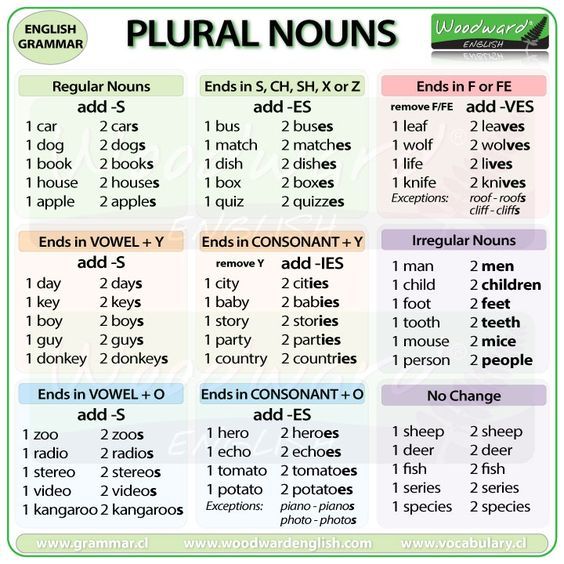
Luckily in this modern world a google image search can quickly bring up pictures of nearly everything in no time at all.  I found the following plural noun chart on a pinterest page:

 plural nouns.jpg

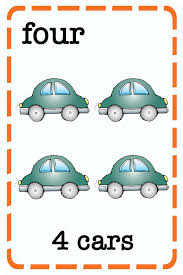
I then did a quick google image search and was able to come up with the following images which depict the words in the first box titled regular nouns:


Each of these pictures are going to be more likely to encourage more speech from this child than from typical flash cards.  

 Image result for flashcards carsImage result for flashcards apples Image result for flashcards books Image result for flashcards houses Image result for flashcards dogs 


If you cannot relate to this example every child is different but whatever your child's strengths or interests maybe adding them to their IEP could make the world of a difference on how they relate to their education.

Personally, I can relate to this example because it came to me when I was a preschool teacher.  

One of the children in my class was fascinated with Thomas and was always holding a Thomas toy wherever he went.  

For the first three quarters of the year this child was almost completely disengaged from the class for all but maybe 2% of the time.  He had difficulty following instructions, sitting for circle or doing the activities we had planned. He hated coming to school.  

Each day he would wait for an hour right next to the door for his parents to pick him up so he could leave as soon as possible.

When I came to work one morning my amazing co teacher had prepared one of her elaborate circle times on the subject of water.  

When I called the children to come in from the play yard, in typical fashion, this child did not listen and remained in the sandbox playing with his Thomas toy. 

As I walked up to him I decided to take a different approach.  

Instead of fighting him I kneeled down on his level and told him that we’re having a special circle that was all about Thomas the Tank Engine.  

Honestly, I figured this had no chance of working. 

I was totally caught off guard when he immediately sprung up and exclaimed “REALLY?”.  

Now I was in trouble.  

I didn’t have a Thomas the Tank Engine circle time prepared and did not want to hijack the circle time from my co teacher since she had done so much in preparation.  

I had to quickly think outside of the box.  Luckily something came to mind.  

I asked the child if he knew that Thomas was actually a steam engine.  

He quickly nodded that he did.  

I went onto explain that steam engines like Thomas run on water, water is what makes them strong, and that today circle time is going to be all about the thing that makes Thomas strong.

The child was super excited to come in for circle and to my surprise jumped directly into my lap.  

For that moment until the end of the year he was a completely different person.

He went from being engaged and following instructions 2% of the time to at least 70%.  He began to interact with his peers and participate in the activities we had prepared.  

That day when his mom came to pick him up he was in the sand box playing with another student.  She was shocked.  

After she picked her jaw up from the floor, she walked over to the sandbox where her son was playing.   To her amazement he asked her if he could stay longer.

When she came up to me and asked what on Earth happened I shared the events that transpired that morning.  

From that day she began to use Thomas analogies in all types of scenarios and it worked.  

It is important to keep in mind the other portion of the goal suggestion I made; the subsequent act of generalization. This is when a child takes the skills he has in one topic and applies them to other areas.  

Without the inclusion of this component the goal may encourage a counter productive hyperfocus upon the subject of trains that would not be helpful.

Trains are just an analogy hook that should be used to advance generalizing the concept being taught from the goal; pluralization of nouns.

All the child needed was the ability to relate to his surroundings.  

What are some of the strengths or interests that may be your child’s Thomas?

Example of strengths:
Use of computers or technology
Exceptional writer
Strong creative ability to create intricate stories
The ability to mimic speech or memorize scripted language
Affinity towards sports
Highly motivated by the use of a particular motivator such as bubbles
Strong work ethic once they understand the objective
Relates to tangible objects as opposed to 2D depictions on flash cards
Identifying real life objects on a walk
Talking through puppets